
Two investors can both want a rental property and end up buying completely opposite things. One pays full price for a renovated, tenant-ready home and starts collecting rent within weeks. The other buys something dated and neglected at a discount, puts in months of work, and aims to come out ahead on the other side. That’s the core of turnkey vs. value-add properties: a trade between convenience and potential upside.
What a turnkey property is
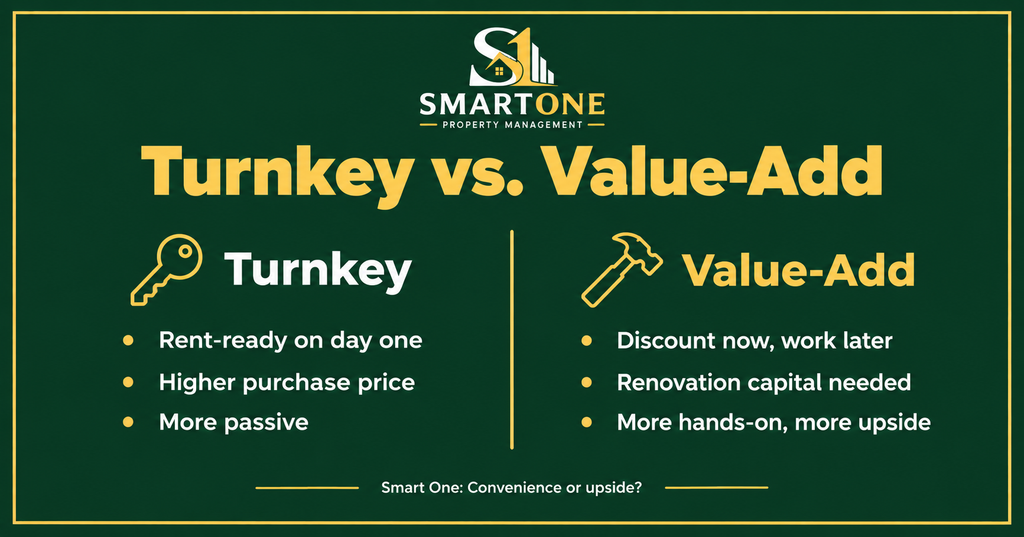
A turnkey property is move-in or rent-ready on day one. It’s typically renovated, in good condition, and often already leased to a tenant, so cash flow can begin almost immediately after closing. You pay for that convenience: turnkey properties generally sell at or near market value, since the seller (or a turnkey provider) has already done the work and priced it in.
What a value-add property is
A value-add property has room to be improved: dated finishes, deferred maintenance, below-market rents, poor management, or a vacant unit that could be leased. You buy it for less than its potential value, invest in improvements or better operations, and aim to increase both rental income and property value. The upside can be significant, but so can the risk if the work runs over budget or over schedule.
How they compare
Upfront cost. Turnkey costs more to buy but requires little additional capital. Value-add costs less to buy but requires renovation funds on top, plus carrying costs while the work is underway.
Time to income. Turnkey can generate rent almost immediately. Value-add typically means months of vacancy or reduced income during renovation before the property performs the way you underwrote it.
Risk profile. Turnkey risk is mostly about overpaying or trusting a seller’s claims about condition and rent. Value-add risk is about execution: cost overruns, permitting delays, contractor problems, and the chance your projected post-renovation rents don’t materialize.
Hands-on effort. Turnkey is far more passive. Value-add demands project management, contractor oversight, and quick decisions, whether you do that yourself or hire it out.
Return potential. Value-add offers more room to create equity through forced appreciation, since you’re improving the asset yourself. Turnkey returns tend to be steadier but more modest, because less value is left on the table for you to capture.
Financing matters here
Turnkey properties usually fit standard financing, since the property is in good condition at purchase. Value-add deals often need creative or specialized financing to cover the renovation, such as renovation loans, cash reserves, or short-term bridge financing. If you plan to live in the property, the FHA 203(k) loan is one option that rolls purchase and renovation costs into a single mortgage.
Which one fits you
This comes back to understanding your goals before making a purchase decision. A busy investor who wants income soon, minimal involvement, and predictable operations is usually better served by turnkey. An investor with renovation experience, available capital, time to manage a project, and a higher tolerance for risk may find value-add produces better returns. Whichever you choose, run the numbers on the real post-renovation scenario, not the best case, before you make an offer.
Weighing a turnkey purchase against a value-add project and want a second opinion on the numbers? Reach out to Smart One.