
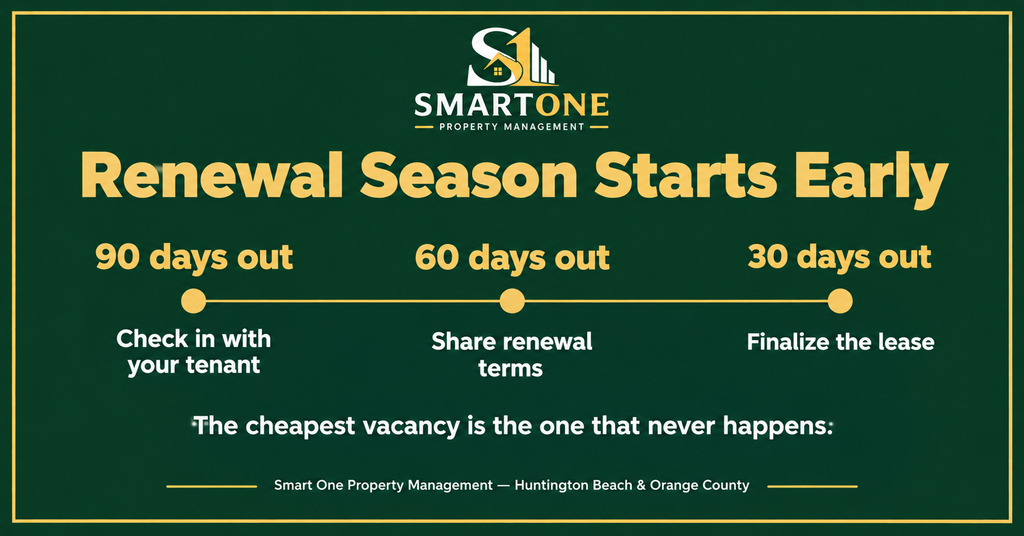
The cheapest vacancy is the one that never happens. Renewal season, the stretch of weeks before a lease ends, is when most owners either keep a good tenant or start paying for a new one. If you want to reduce tenant turnover, the work starts earlier than most people think.
What a move-out really costs
Estimates vary by market and by how costs are counted, but they consistently land in the thousands. A 2026 report from Zego, based on a survey of property management professionals at larger multifamily companies, puts a single turnover at roughly $4,000 per unit. In a separate survey of more than 5,000 landlords by Bay Property Management Group, nearly 60% said a typical turnover costs more than $2,000, and over 80% spend at least $1,000 per unit. That’s before counting the weeks the unit may sit empty. Those figures come from industry surveys of mostly multifamily and Mid-Atlantic/Texas markets, so treat them as directional rather than a quote for your property, but the pattern is clear: turnover is expensive, and it’s the top challenge for 42% of owners in Hemlane’s 2026 owner survey.
Cleaning, repainting, repairs, marketing, screening, and lost rent all land at once. Keeping a good tenant, even with a modest concession, is almost always cheaper.
Start early
Reach out roughly 60 to 90 days before the lease ends, not 30. Early outreach gives you time to learn whether the tenant plans to stay, and gives them time to decide without feeling rushed. A simple check-in call or message often tells you more than a formal notice will.
Price the renewal thoughtfully
An illustrative example: on a $2,800 rental, a 5% increase is $140 a month, or $1,680 a year. If that increase pushes a good tenant out and turnover costs $4,000 plus vacancy, you’d need more than two years of the higher rent just to break even. That doesn’t mean never raise rent. It means weighing the increase against what a move-out would cost, and checking current market comparables so the renewal price is fair rather than aspirational. Keep in mind that California rent increases come with notice requirements and, for many properties, statutory caps, so confirm what applies to your property before setting a number.
Build the relationship all year
Retention isn’t built in the last month of the lease. Tenants who got fast, professional answers to maintenance requests throughout the year are far more likely to renew than tenants who felt ignored. This is where maintenance coordination matters: every repair handled well is a small deposit toward the next renewal.
Consider small incentives
A professional carpet cleaning, a minor upgrade, or a fixed rent for a longer term can cost far less than a turnover. The goal isn’t to buy loyalty, it’s to remove a reason to leave.
Know when not to renew
Not every tenant is worth keeping. A pattern of late payments or documented lease violations is a legitimate reason to let a lease end, as long as the decision is applied consistently and in compliance with California’s rules. Retention is about keeping good tenants, not every tenant.
The takeaway
Renewal season is a decision point, not a formality. Starting early, pricing fairly, and showing up consistently throughout the year costs far less than a vacancy and a fresh round of marketing, screening, and make-ready work.
This post is general information, not legal advice. California rent increase and notice rules vary by property and situation, so consult an attorney or your property manager before sending a renewal or rent increase notice.
Want help managing renewals and keeping your best tenants? Reach out to Smart One Property Management.
Sources: Baselane, Tenant Turnover Statistics; Bay Property Management Group, 5,000+ Landlords Say Rising Costs Are Changing Rental Housing; Hemlane, 2026 Rental Owner Report.