
A lease violation — unauthorized pets, an extra occupant who isn’t on the lease, late rent that’s becoming a pattern — is stressful enough on its own. What actually gets owners into trouble, though, is often how the violation gets handled rather than the violation itself. Here are the lease violation mistakes landlords make most often, and what to do instead.
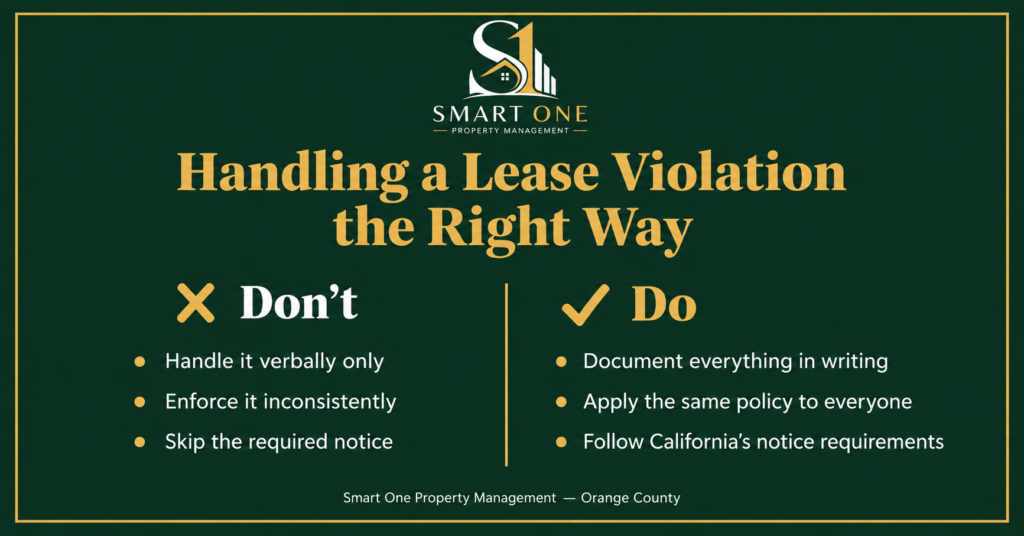
Handling it verbally instead of in writing
A phone call or a conversation at the door might feel like the easier first step, but if the issue continues, you’ll wish you had it in writing. Every lease violation notice should be documented — what the violation is, when it occurred, and what needs to happen to resolve it — even if you also address it in person first. Verbal warnings are nearly impossible to enforce later if the situation escalates.
Inconsistent enforcement
Letting one tenant slide on a late fee while enforcing it strictly for another isn’t just unfair — it can undermine your position if a dispute ever ends up in front of a judge, and it can raise fair housing concerns if the inconsistency lines up with a protected characteristic, even unintentionally. Whatever your policy is, it needs to apply the same way to everyone.
Skipping the required notice period
California law requires specific types of notice — and specific time periods — depending on the violation. Jumping straight to an eviction filing without providing the legally required notice and opportunity to cure is one of the fastest ways to have a case dismissed, which costs you time, filing fees, and often another full notice cycle before you can try again. The California Courts Self-Help Center’s guide to evictions is a useful starting point for understanding notice requirements before taking action.
Escalating too fast
Not every violation needs to end in an eviction notice. A first-time, minor violation — a guest staying slightly longer than the lease allows, for example — is often better handled with a documented conversation and a clear expectation going forward. Save formal notices and legal escalation for violations that are serious, repeated, or left unresolved after a good-faith attempt to fix them.
Not knowing when a violation is actually a lease issue at all
Sometimes what looks like a violation is actually a maintenance issue in disguise — a tenant who stopped paying rent because a habitability issue went unaddressed, for example. Handling it purely as a lease violation without looking at the full picture can create bigger legal exposure than the original issue.
Why this trips up self-managing owners specifically
Every one of these mistakes tends to come from the same root cause: handling an infrequent, high-stakes situation without a repeatable process already in place. A property manager who deals with lease violations regularly knows the correct notice type, the required timeline, and when a situation calls for a conversation versus a formal notice — because it’s not a once-a-year decision for them, it’s a process they run consistently. If you’ve found tenant issues to be the hardest part of self-managing, that’s often one of the clearest signs it’s time to hire a property manager, and it connects directly to the kind of tenant screening that helps prevent these situations from coming up in the first place.
How Smart One handles lease violations
At Smart One, every lease violation is documented, addressed with the legally required notice, and handled consistently across every property we manage — protecting owners from the compliance risk that comes with getting it wrong.
Dealing with a tenant issue you’re not sure how to handle? Contact Smart One Property Management today.