
Not every investor wants the same thing — and treating them like they do is one of the most common mistakes an agent can make. Two clients can both call themselves “real estate investors” and want almost opposite properties, in opposite locations, at opposite price points. The agent who understands real estate investor goals before making a recommendation serves the client well. The agent who doesn’t ends up showing the wrong properties, losing trust, or — worse — putting a client into a deal that doesn’t actually fit what they were trying to accomplish.
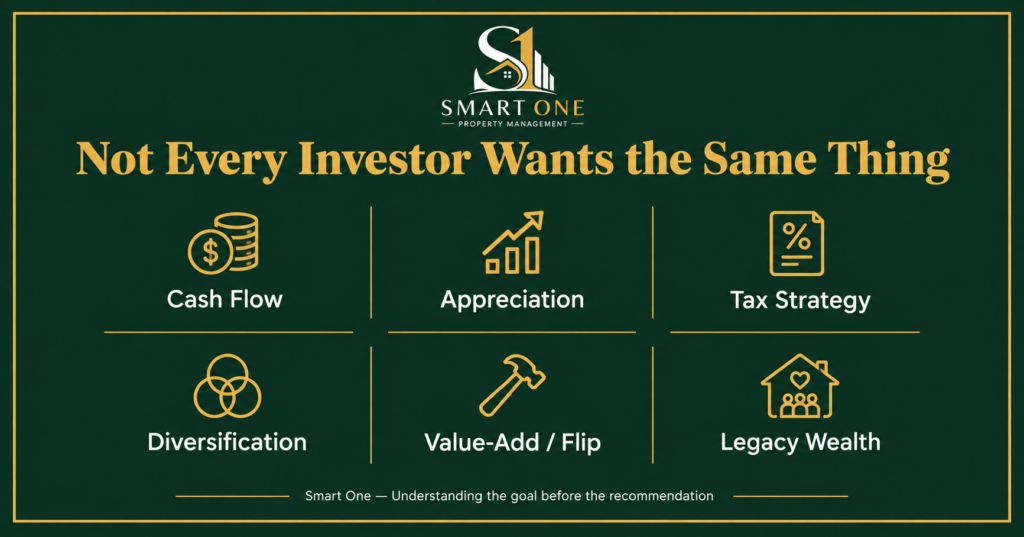
The goals aren’t all the same
Cash flow. Some investors want monthly income, full stop. They’re less concerned with a property’s long-term appreciation potential and more focused on rent-to-price ratio, vacancy risk, and ongoing operating costs. A high-appreciation neighborhood with thin cash flow margins is often the wrong fit here, even if it looks like a “good” investment on paper.
Appreciation. Other investors are playing a longer game — they’re comfortable with lower or even negative cash flow in exchange for equity growth over time. These clients are often more focused on location fundamentals, growth trends, and future development than on this month’s rent roll.
Tax strategy. Some investors are moving equity out of one property and into another specifically to defer capital gains through a 1031 exchange, or structuring a purchase around depreciation and other tax benefits. These transactions come with strict timelines and requirements — the IRS’s guidance on like-kind exchanges is worth understanding well enough to at least recognize when a client should be talking to their CPA before, not after, they make an offer.
Portfolio diversification. Some clients aren’t looking for their best possible deal — they’re looking for a specific piece to round out a portfolio: a different property type, a different market, or a different level of risk than what they already own.
Value-add or short-term. Flippers and short-term investors need a completely different lens — after-repair value, renovation cost estimates, and holding costs during the project, rather than long-term rent projections at all.
Legacy and generational wealth. Some investors aren’t optimizing for return at all in the traditional sense. They’re building something to pass down, and stability, location, and long-term hold potential matter more than maximizing yield.
Why this matters more than it seems
Recommending a property without understanding which of these goals a client is actually working toward isn’t just inefficient — it can actively work against them. A cash-flow investor steered toward an appreciation play may end up subsidizing a property every month and resenting the advice that put them there. A legacy-focused client pushed toward an aggressive value-add project may take on more risk and hands-on work than they ever wanted. Good intentions don’t prevent a mismatched recommendation from damaging trust, and trust is the entire foundation of a long-term client relationship.
Questions worth asking before the first showing
Before pulling listings, it’s worth understanding: Is this investor looking for income now, growth later, or both? What’s their tolerance for hands-on work — value-add and renovation, or a truly passive hold? Is there a tax or timeline consideration driving the purchase, like a 1031 exchange deadline? Is this a standalone investment decision, or part of a broader portfolio strategy? And just as important — is this a first investment property, or does the client already have experience to draw on?
The answers change which properties are worth showing at all, not just how they’re presented once you’re there.
The takeaway
Every investor is optimizing for something — but it’s rarely the same thing twice. Taking the time to understand a client’s actual goal before making a recommendation isn’t extra work on top of the job. It is the job. It’s the difference between an agent who sells a property and an agent who serves a client.
Working with investors and want a team that takes the time to understand what you’re actually trying to build? Reach out to Smart One.