
A maintenance request seems simple enough: something breaks, you find someone to fix it, the tenant’s happy, you move on. In practice, that’s where a lot of self-managing owners get burned. DIY maintenance coordination mistakes rarely show up as one big disaster — they show up as a slow drip of overpaid invoices, frustrated tenants, and the occasional legal exposure nobody saw coming.
No vendor relationships means no leverage
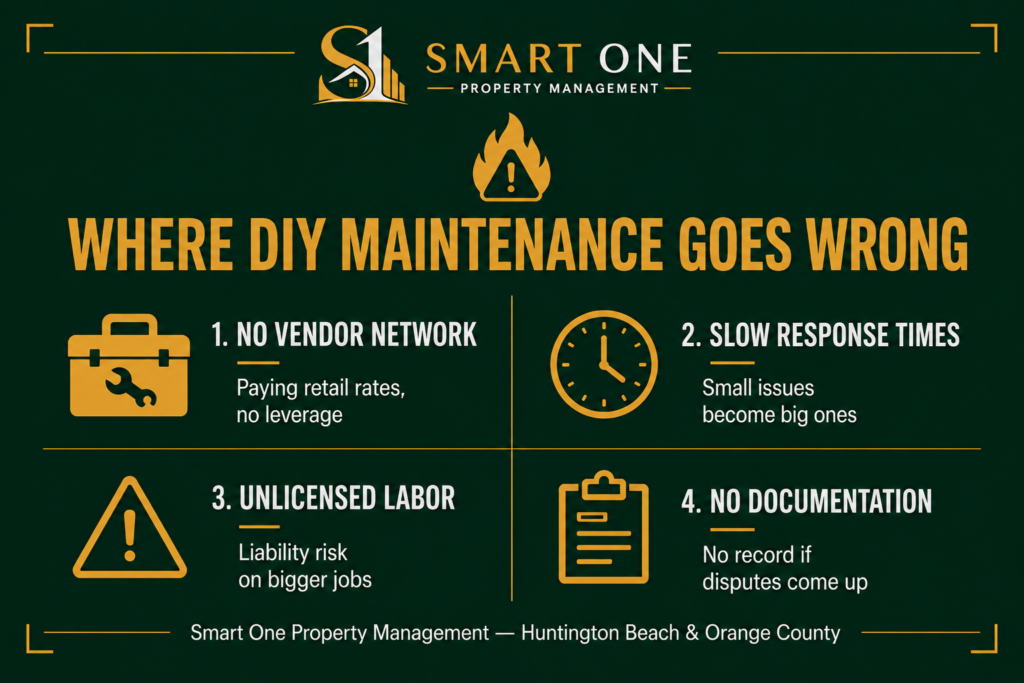
Without an established network, most self-managing owners are calling around for whoever’s available — and paying whatever that vendor asks. There’s no negotiated rate, no volume pricing, and no easy way to know if a quote is fair without getting a second one, which takes even more time. Emergency repairs make this worse: a vendor who knows you need someone tonight has little incentive to give you their best price.
Slow response times turn small problems into big ones
A minor leak reported on a Friday and not addressed until Monday can turn into water damage, mold, or a habitability complaint by the time anyone gets to it. California law requires landlords to maintain rental units in habitable condition, and delays in addressing things like heating, plumbing, or safety issues can create real legal exposure — not just an unhappy tenant. Dedicated maintenance coordination exists specifically to close that gap between “reported” and “resolved.”
Hiring the wrong person for the job
Not every repair is a handyman job. In California, most work over $500 in combined labor and materials legally requires a licensed contractor, and using an unlicensed person for larger jobs — even someone reliable and cheap — can create liability if something goes wrong later. The California Contractors State License Board has guidance on when a license is actually required, and it’s worth knowing before hiring anyone for anything beyond a basic fix.
Poor documentation
When maintenance requests, vendor communications, and repair timelines only exist in text messages and memory, there’s no clear record if a tenant later disputes what was fixed, when, or how well. That gap becomes a real problem if a security deposit dispute or habitability claim ever escalates.
Why this is where self-managing owners feel it most
Maintenance is the part of self-managing that tends to wear owners down fastest, because it’s unpredictable — you can’t schedule around a burst pipe. It’s also where the hidden costs of self-managing show up most directly, in markups, delays, and the coordination time nobody accounts for. If maintenance requests are the part of the job you dread most, that’s often one of the clearer signs it’s time to hire a property manager.
How Smart One handles maintenance differently
At Smart One, every maintenance request runs through an established, vetted vendor network with negotiated rates — not whoever happens to be available. Requests are tracked and documented from report to resolution, and repairs requiring a licensed contractor are handled by one, every time. Owners get a fixed, predictable process instead of a new gamble every time something breaks.
Tired of being the one fielding every maintenance call? Contact Smart One Property Management today.