
Rent doesn’t show up on the first, and now what? What happens when a tenant stops paying rent is one of the most stressful situations a self-managing owner can face — partly because of the lost income, and partly because California gives landlords a specific, legally required process to follow, with real consequences for skipping steps.
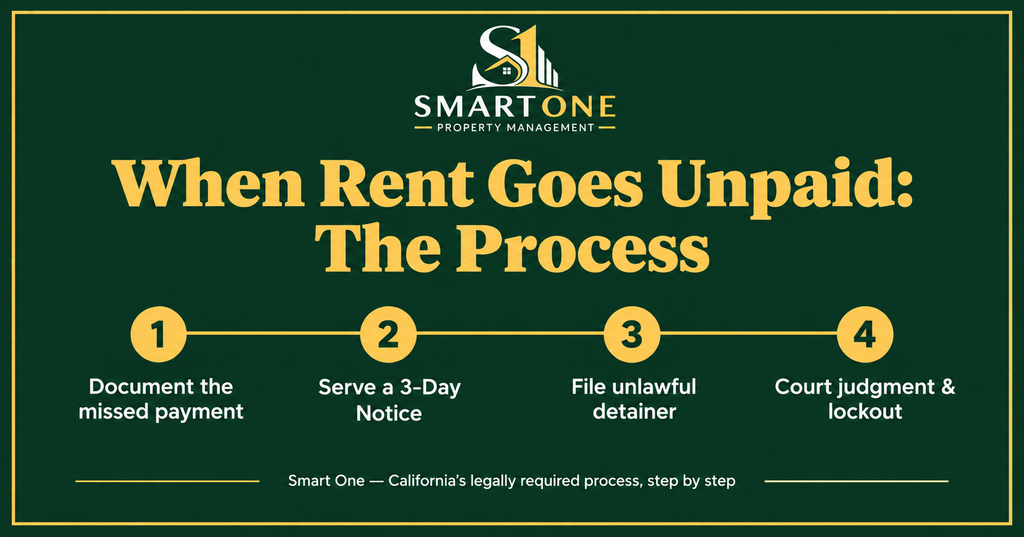
Step 1: Confirm and document
Before anything else, confirm the payment genuinely didn’t arrive — a bank delay or a processing error happens more often than people expect — and document the missed payment with a date and amount. This record matters if the situation escalates.
Step 2: Serve a 3-Day Notice to Pay Rent or Quit
If rent is genuinely unpaid, the next legally required step is a 3-Day Notice to Pay Rent or Quit. To be valid in California, the notice needs the full legal names of all tenants on the lease, clear instructions for how and where to pay, a specific expiration date, and it must account for the fact that weekends and judicial holidays don’t count toward the three days — so a notice served on a Thursday effectively runs into the following week. The notice can only demand the actual unpaid rent — not late fees, utility charges, or other add-on costs, even if those are also technically owed.
Step 3: What happens if the tenant pays — or doesn’t
If the tenant pays the full amount demanded within the notice period, that typically resolves the situation, and the notice is satisfied. If they don’t pay and don’t move out, the next step is filing an unlawful detainer lawsuit in Superior Court — this is the formal legal term for an eviction case.
Step 4: The unlawful detainer process
Once filed, the tenant is served with a summons and complaint and has 10 business days to file a written response. If they don’t respond in time, the landlord can request a default judgment. If they do respond, the case proceeds through the court process, which can take additional weeks depending on the court’s schedule and whether the tenant contests it.
What you can’t do — even if you’re frustrated
California law is strict on this point: the only lawful way to remove a tenant is a court judgment followed by a sheriff-executed lockout. Changing the locks, shutting off utilities, removing a tenant’s belongings, or any other “self-help” eviction is illegal in California, regardless of how much rent is owed or how clearly the tenant is in the wrong. Taking matters into your own hands can expose you to real liability — including potential damages owed to the tenant — on top of the unpaid rent you were already trying to collect.
Before you escalate
Not every missed payment needs to go straight to a formal notice. A tenant with an otherwise solid payment history who’s dealing with a genuine, temporary hardship may be worth a conversation and a documented partial-payment plan before escalating — that’s a business judgment call, not a legal requirement, but it’s often the difference between resolving something quickly and losing a good tenant over one rough month. Whatever you decide, document it in writing either way.
Why this is where self-managing owners feel the most pressure
The timelines, notice requirements, and prohibition on self-help eviction are exactly the kind of process a property manager runs routinely rather than learning for the first time under stress. The California Courts Self-Help Center’s eviction guide is a solid starting point for understanding the process, but timing and paperwork mistakes are common even with good information in hand.
Dealing with a tenant who’s stopped paying and not sure what to do next? Reach out to Smart One Property Management.
****Disclaimer: This article is for general informational purposes only and does not constitute legal advice. Laws affecting landlords and tenants change frequently and can vary by city and county. Before taking action based on this information, please consult a licensed attorney regarding your specific situation.
Leave a Reply