
“It’s only been two weeks” is one of the most expensive sentences a rental property owner can say. The cost of a vacant rental property isn’t just the rent you’re not collecting — it’s every ongoing expense that keeps running whether or not someone’s paying to live there. Most owners underestimate it because it never arrives as a single bill. It shows up quietly, a little at a time, until the vacancy is over and the math finally catches up.
What actually adds up during a vacancy
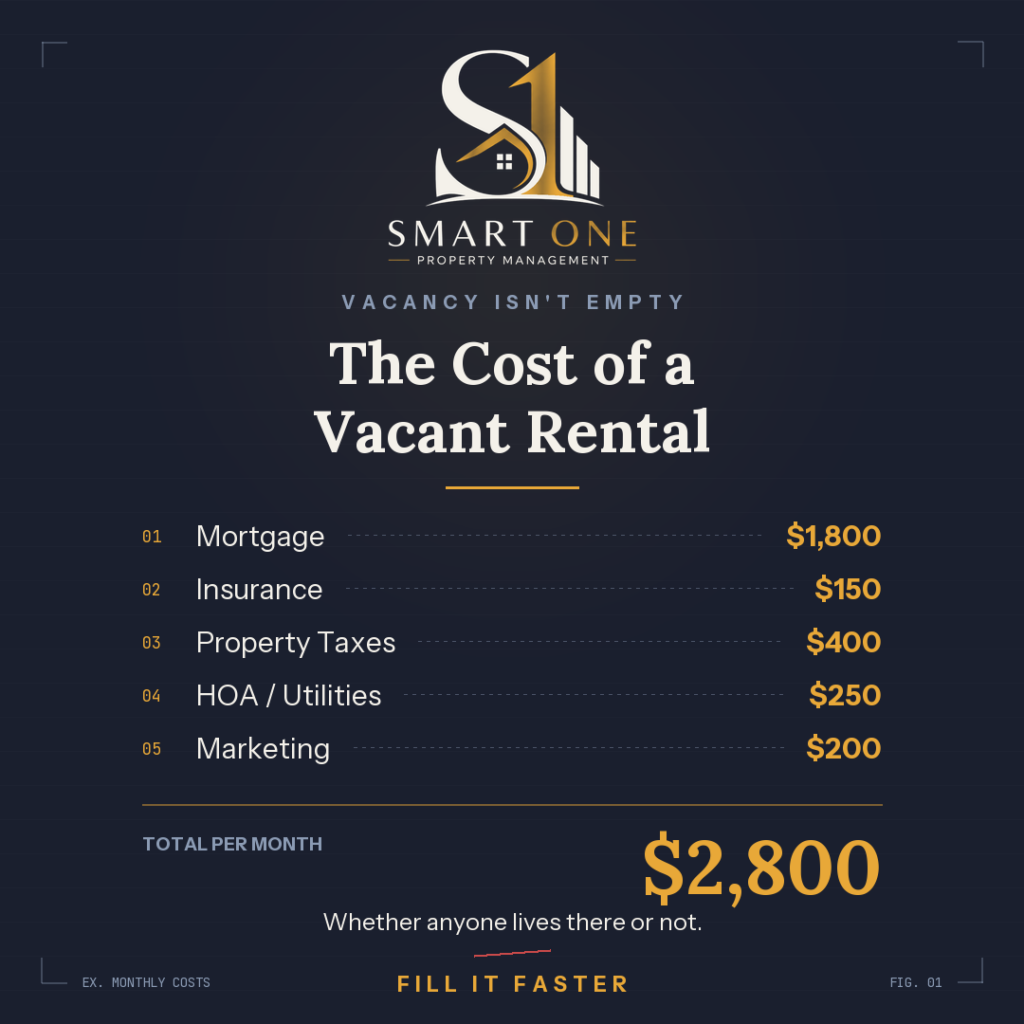
Start with the obvious: lost rent. But that’s only the beginning. While a unit sits empty, you’re still covering the mortgage, property taxes, insurance, HOA dues if applicable, and utilities you may need to keep on for showings. Add in any make-ready costs — cleaning, paint touch-ups, minor repairs — plus the marketing spend to actually find a new tenant, and the “free” period of vacancy starts looking a lot less free.
Here’s a simple way to estimate it: add up your monthly mortgage payment, insurance, taxes (monthly portion), and any HOA or utility costs you’re still paying, then divide by 30 to get your daily holding cost. Multiply that by the number of vacant days, and add the marketing and turnover costs on top. A two-week vacancy on a property with $2,800 in monthly rent and $600 in ongoing costs isn’t just $1,400 in lost rent — it’s closer to $1,700 once holding costs are included, and that’s before counting a single dollar spent on marketing. (These figures are illustrative — plug in your own numbers to see what your specific vacancy actually costs.)
Why vacancies run longer than they should
A few patterns show up again and again with self-managed vacancies:
Pricing based on guesswork. Setting rent from a Zillow estimate or what the last tenant paid, rather than current comparable listings, either scares off qualified applicants or leaves money on the table.
Limited marketing reach. A single listing site or a yard sign reaches a fraction of the renters who are actually looking.
Slow response times. Serious renters are often looking at multiple units. If it takes a day or two to respond to an inquiry or schedule a showing, that renter has usually already signed a lease somewhere else.
Inconvenient or infrequent showings. Requiring renters to work around a narrow window of availability — especially if you’re fitting showings around a full-time job — filters out otherwise qualified applicants who simply couldn’t make it work.
How to reduce rental vacancy time
The fastest way to reduce rental vacancy time is to shrink the gap between “listing goes live” and “qualified tenant moves in.” That means pricing the unit accurately from day one, marketing it across multiple channels simultaneously, responding to inquiries same-day, and making the property available to show on the renter’s schedule — not just yours. According to the U.S. Census Bureau’s Housing Vacancy Survey, rental vacancy rates shift with the broader market, which is exactly why pricing based on current, local data matters more than a rule of thumb.
We’ve also covered the other side of this — the hidden costs of self-managing a rental beyond vacancy alone, and the signs it may be time to hire a property manager if vacancy and turnover are becoming a recurring problem rather than an occasional one.
How Smart One minimizes vacancy time
At Smart One, we price listings using current local market data, market them across multiple channels from day one, and handle showings in person — including evenings and weekends — so a scheduling conflict never costs you a qualified tenant. Fewer vacant days means more of your rental income actually reaches you.
Curious what your property’s realistic time-to-lease looks like in today’s market? Contact Smart One Property Management today.