
Tag: Orange County Property Manager

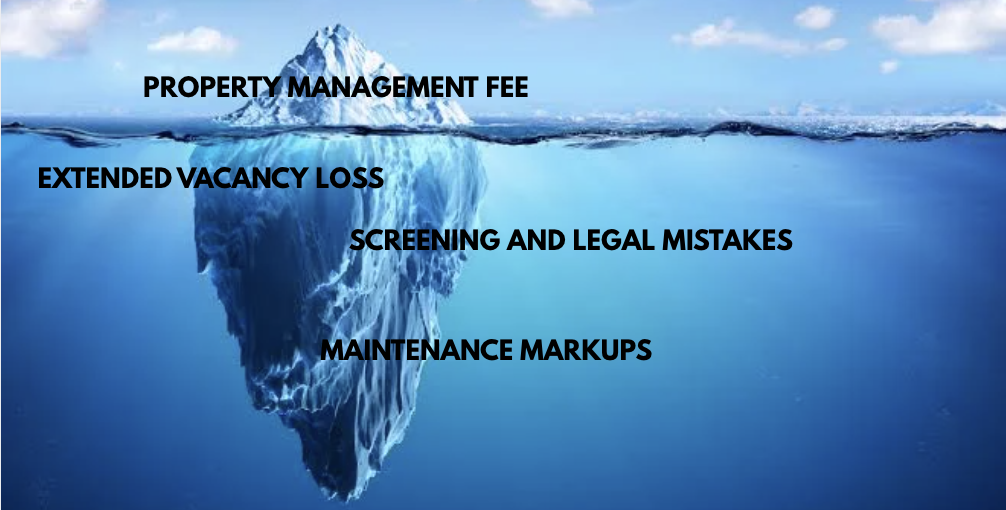
  • 3 Hidden Costs of Self-Managing Your Rental

    Managing your own rental looks free on paper. No management fee, no middleman, no cut out of your monthly rent check. But “free” and “no cost” aren’t the same thing. Once you add up the time, the mistakes, and the markups that come with doing it all yourself, the hidden costs of self-managing your rental often outweigh whatever fee you were trying to avoid in the first place.

    Here are three of the biggest ones — and why the true cost of self-managing a rental property rarely shows up on a single line item.
    1. Extended vacancy loss

    Every day a unit sits empty, you’re paying the mortgage, insurance, and utilities on a property that’s generating zero income. Self-managing owners tend to see longer vacancies for a few predictable reasons: fewer marketing channels than a professional manager has access to, slower response times to inquiries because you’re fitting showings around a full-time job, and pricing that’s based on a rough estimate rather than current, hyperlocal comparables.

    A week or two of extra vacancy might not sound like much. Multiplied across a 12-month lease, it can quietly wipe out what you thought you were saving by not paying a management fee.

    Tenant screening looks simple until you’re the one deciding whether an applicant’s explanation for a low credit score or a gap in rental history is a red flag or a reasonable story. Get it wrong, and the cost isn’t just a bad tenant — it’s unpaid rent, property damage, and potentially a drawn-out eviction process.

    California’s landlord-tenant laws add another layer of risk. Notice requirements, security deposit rules, and fair housing compliance all carry real financial exposure if handled incorrectly — even unintentionally. A single missed deadline or improperly worded notice can turn a routine tenant issue into a legal expense that dwarfs any management fee you were hoping to avoid.

    3. Maintenance markups

    Without an established network of vendors, most self-managing owners end up calling around for whoever’s available — and paying retail rates for it. There’s no volume pricing, no negotiated rate, and often no second opinion on whether a quote is fair. Emergency repairs are worse: a plumber or handyman who knows you need someone right now has little incentive to give you their best price.

    Beyond the dollar cost, there’s the coordination cost — the calls, the follow-ups, the trip to let the vendor in because you couldn’t find one who’d do it without you present. That’s time that has a cost too, even if it never shows up on an invoice.

    What this actually adds up to

    None of these costs are dramatic on their own. A slightly longer vacancy here, a slightly higher repair bill there. But stacked together over a year, the true cost of self-managing a rental property is usually much higher than owners expect — and much harder to see coming than a flat monthly management fee. If any of this sounds familiar, it may be worth revisiting whether self-managing is still saving you anything. For a closer look at how to evaluate that tradeoff, see our post on 5 signs it’s time to hire a property manager in Huntington Beach. For general guidance on landlord recordkeeping and expenses, the IRS’s guide to rental property income and expenses is a useful outside reference.

    How Smart One keeps costs predictable

    At Smart One, we replace unpredictable, one-off expenses with an all-inclusive management fee — no surprise markups, no guessing what a repair will actually cost. Our maintenance coordination runs through an established vendor network, our marketing fills vacancies faster, and our screening process is built to catch the red flags before they become expensive problems.

    Curious what your rental would look like with predictable costs and no hidden surprises? Contact Smart One Property Management today.

  • 5 Signs It’s Time to Hire a Property Manager in Orange County

    Owning a rental property in Long Beach or Orange County sounded simple at the start: collect rent, cover the mortgage, watch the equity build. Then the first 11pm maintenance call came in. Or a tenant stopped paying and you weren’t sure what to do next. Or you realized you’d spent your entire Saturday driving out to show a vacant unit to someone who never showed up.

    Self-managing works for some owners. For others, it quietly turns into a second job — one that eats into the time, energy, and profit the property was supposed to create. Here are five signs it might be time to bring in a property manager.

    1. You’re losing more time than the property is worth

    Every hour spent fielding maintenance calls, chasing late rent, or coordinating a showing is an hour you’re not getting paid for. If you added up the time you spend managing your rental each month and multiplied it by what your time is actually worth, would the math still make sense? For a lot of owners, the honest answer is no — the property is profitable on paper, but the time cost quietly cancels it out.

    2. Vacancies are dragging on longer than they should

    A vacant unit costs you money every single day it sits empty — not just in lost rent, but in the mortgage, insurance, and utilities you’re still paying regardless. If your listings are taking weeks longer to fill than comparable units nearby, the issue usually isn’t the property. It’s marketing reach, pricing, or the inability to show the unit quickly to serious renters. A property manager with local market knowledge and an established process for filling vacancies fast can turn that around.

    3. You’ve had a tenant problem you didn’t know how to handle

    Late payments, lease violations, property damage, or a tenant who simply won’t respond — these situations come up eventually, and California’s landlord-tenant laws don’t leave much room for guesswork. One mishandled notice or missed deadline can turn a simple issue into a costly legal one. If you’ve ever found yourself Googling “can I evict a tenant for…” at 10pm, that’s usually a sign you’d benefit from someone who handles these situations for a living.

    4. Maintenance requests are a constant source of stress

    Coordinating repairs sounds straightforward until you’re the one fielding the call, finding a vendor who’s actually available, negotiating the price, and following up to make sure the work got done right. Self-managed maintenance also tends to cost more — without an established network of vendors, owners often end up paying premium rates for basic repairs. Dedicated maintenance coordination means requests get handled quickly and correctly, without you being the middleman for every leaky faucet.

    5. You’re not sure your rent is priced right

    The Huntington Beach and Orange County rental market shifts throughout the year, and pricing a unit even slightly below market adds up to real money over a 12-month lease. Price it too high, and you’re the reason it’s sitting vacant. Most self-managing owners are relying on a Zillow estimate or what the last tenant paid — not current, hyperlocal data. A property manager who works in your specific market day to day can tell you what your unit should actually rent for right now.

    What this is really costing you

    None of these signs are a failure on your part — they’re just what happens when a job that requires local market knowledge, legal awareness, vendor relationships, and constant availability gets handled part-time, on top of everything else you’re already doing. The question isn’t whether you’re capable of self-managing. It’s whether it’s still the best use of your time and the smartest way to protect your investment.

    How Smart One Property Management Is Different

    At Smart One, we handle the parts of property management that wear owners down — in-person showings instead of lockbox-and-hope, dedicated maintenance coordination instead of you being the middleman, and one all-inclusive fee instead of surprise add-ons buried in a contract. And when you call, a real person answers. Not a call center, not an app-only support queue.

    If any of the five signs above sound familiar, let’s talk about what professional management would actually look like for your property.

    Ready to see what your rental could look like with the right support? Call Smart One Property Management today for a free rental analysis.

  • That 19% Housing-Starts Jump Isn’t What It Looks Like

    The latest construction report from the U.S. Census Bureau and HUD showed housing starts up 19% in June — a number that sounds like a construction boom. It isn’t quite that simple, and the details matter more to property owners and investors than the headline does.

    The increase was concentrated, not broad-based. Single-family starts actually dipped slightly in June, coming in essentially flat. Nearly all of the jump came from multifamily construction — apartment buildings, which count differently in the data. A single 250-unit building registers as 250 “starts” the moment ground breaks, the same as 250 separate single-family homes taking months to build. Both add supply, but they don’t compete for the same buyers or affect the same neighborhoods.

    Permits tell a more cautious story. Building permits, which signal what’s authorized next, fell 3% overall, with single-family permits down 2.4%. Builders aren’t rushing to expand the future single-family pipeline — they’re pulling back on it, even as multifamily activity surged.

    Completions are the number that actually matters right now. While single-family starts barely moved, single-family completions rose 6.6% in June. That’s the stage of construction most likely to hit the market soon: completed homes become listings, quick-move-in inventory, and direct competition for resale sellers. A slower future pipeline doesn’t mean less competition today — homes started months ago are still landing on the market now.

    New-home inventory is still meaningful. Nationally, builders had about 10.3 months of new single-family homes for sale as of the latest report. That inventory doesn’t sit still — builders move it with mortgage-rate buydowns, closing-cost credits, design upgrades, and other incentives that don’t always show up in the recorded sale price. A resale home priced right on paper can still lose a buyer to a builder incentive package next door.

    None of this lands evenly. New construction competes by price band and location, not by national headline. A luxury resale home isn’t affected by an entry-level townhome community. A new apartment complex may barely register in one neighborhood and reshape rents in another. The national report tells you the direction; only the local numbers tell you what it means for a specific property.

    What this means if you own or manage property locally

    National data is a starting point, not a forecast for Huntington Beach or Orange County specifically. The questions that actually matter are local: How much completed builder inventory is nearby? Are new apartment communities offering concessions that could pull tenants away? Are single-family permits in this submarket rising or slowing? Is a property’s price band facing real new-construction competition, or none at all?

    This is the layer of analysis that gets lost in a headline number — and it’s exactly where property owners and investors benefit from a local partner watching the market rather than a national statistic. At Smart One Property Management, we track what’s actually happening in Huntington Beach and Orange County: local permit activity, nearby builder inventory, rental concessions, and how they affect what a property can rent for or compete against. Whether you own a single rental home or a growing portfolio, that local read is what protects your pricing, your occupancy, and your long-term returns — not the national headline.

    Thinking about how local construction trends might affect your property or investment strategy? Let’s talk. Contact us at (714) 830-1318 today or email us at info@smartonepropertymanagement.com.