
Managing your own rental looks free on paper. No management fee, no middleman, no cut out of your monthly rent check. But “free” and “no cost” aren’t the same thing. Once you add up the time, the mistakes, and the markups that come with doing it all yourself, the hidden costs of self-managing your rental often outweigh whatever fee you were trying to avoid in the first place.
Here are three of the biggest ones — and why the true cost of self-managing a rental property rarely shows up on a single line item.
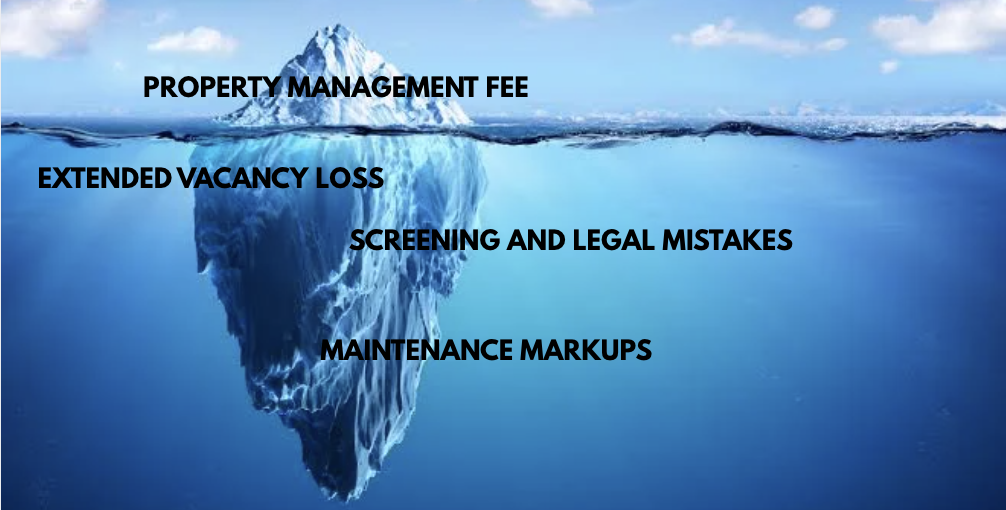
1. Extended vacancy loss
Every day a unit sits empty, you’re paying the mortgage, insurance, and utilities on a property that’s generating zero income. Self-managing owners tend to see longer vacancies for a few predictable reasons: fewer marketing channels than a professional manager has access to, slower response times to inquiries because you’re fitting showings around a full-time job, and pricing that’s based on a rough estimate rather than current, hyperlocal comparables.
A week or two of extra vacancy might not sound like much. Multiplied across a 12-month lease, it can quietly wipe out what you thought you were saving by not paying a management fee.
2. Screening and legal mistakes
Tenant screening looks simple until you’re the one deciding whether an applicant’s explanation for a low credit score or a gap in rental history is a red flag or a reasonable story. Get it wrong, and the cost isn’t just a bad tenant — it’s unpaid rent, property damage, and potentially a drawn-out eviction process.
California’s landlord-tenant laws add another layer of risk. Notice requirements, security deposit rules, and fair housing compliance all carry real financial exposure if handled incorrectly — even unintentionally. A single missed deadline or improperly worded notice can turn a routine tenant issue into a legal expense that dwarfs any management fee you were hoping to avoid.
3. Maintenance markups
Without an established network of vendors, most self-managing owners end up calling around for whoever’s available — and paying retail rates for it. There’s no volume pricing, no negotiated rate, and often no second opinion on whether a quote is fair. Emergency repairs are worse: a plumber or handyman who knows you need someone right now has little incentive to give you their best price.
Beyond the dollar cost, there’s the coordination cost — the calls, the follow-ups, the trip to let the vendor in because you couldn’t find one who’d do it without you present. That’s time that has a cost too, even if it never shows up on an invoice.
What this actually adds up to
None of these costs are dramatic on their own. A slightly longer vacancy here, a slightly higher repair bill there. But stacked together over a year, the true cost of self-managing a rental property is usually much higher than owners expect — and much harder to see coming than a flat monthly management fee. If any of this sounds familiar, it may be worth revisiting whether self-managing is still saving you anything. For a closer look at how to evaluate that tradeoff, see our post on 5 signs it’s time to hire a property manager in Huntington Beach. For general guidance on landlord recordkeeping and expenses, the IRS’s guide to rental property income and expenses is a useful outside reference.
How Smart One keeps costs predictable
At Smart One, we replace unpredictable, one-off expenses with an all-inclusive management fee — no surprise markups, no guessing what a repair will actually cost. Our maintenance coordination runs through an established vendor network, our marketing fills vacancies faster, and our screening process is built to catch the red flags before they become expensive problems.
Curious what your rental would look like with predictable costs and no hidden surprises? Contact Smart One Property Management today.